Transcloud
December 19, 2025
December 19, 2025
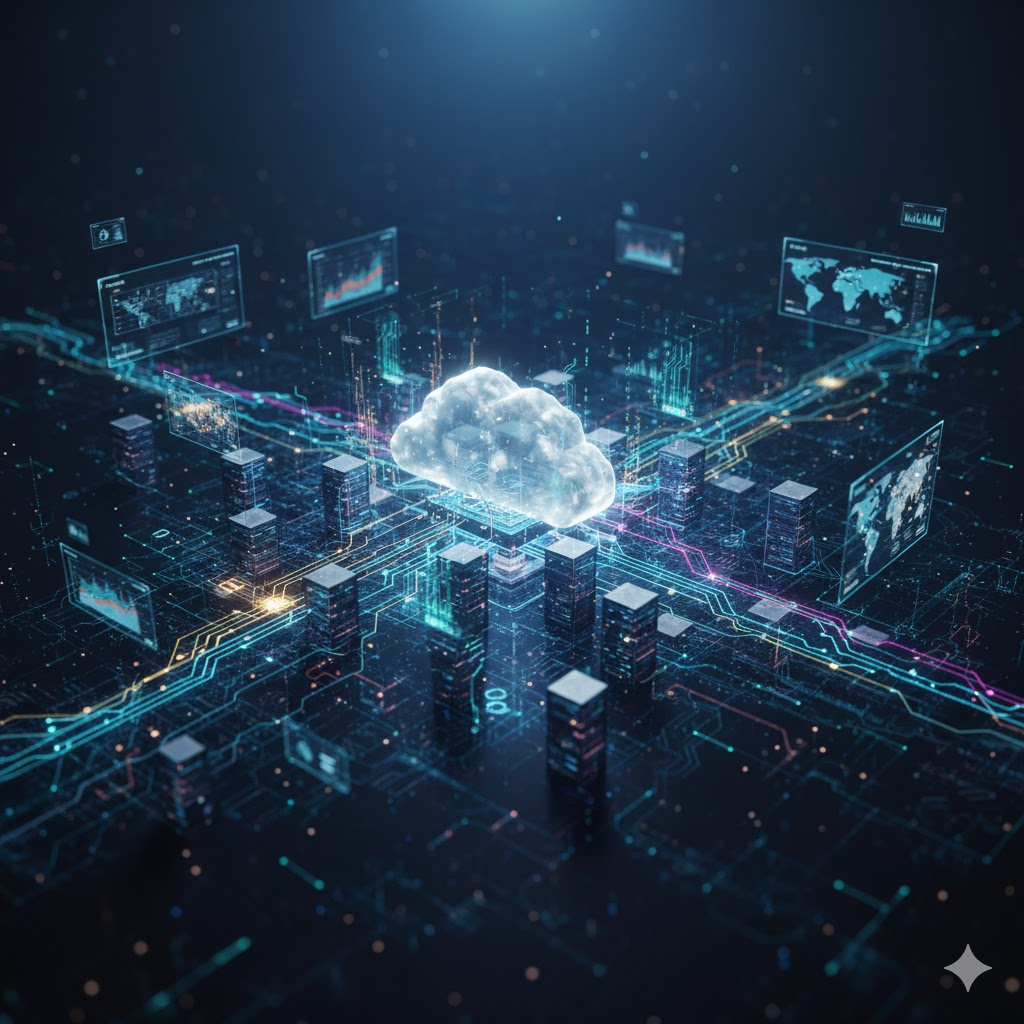
The modern enterprise is defined by its digital footprint. With systems interconnected across hybrid and multi-cloud environments, the capacity to not just recover from, but actively resist and adapt to disruption is the ultimate competitive advantage. This is Digital Resilience. It extends far beyond traditional cybersecurity to encompass the availability, integrity, and continuity of all critical business functions—from supply chain logistics to customer-facing applications.
Traditional, rule-based security systems are fundamentally reactive. They wait for a known threat signature before responding. In a world where new vulnerabilities and Generative AI-powered attacks are emerging constantly, this reactive posture is a recipe for failure.
Artificial Intelligence (AI) and Machine Learning (ML) change the game by enabling predictive and adaptive defenses. They process and analyze the petabytes of data flowing through modern systems at machine scale, identifying subtle, emergent patterns of risk that no human team or legacy system could ever detect, let alone respond to in real-time.
The complexity of the modern digital landscape creates exponentially growing attack surfaces:
Traditional defense-in-depth relies on fixed perimeter controls, defined signatures, and human-intensive monitoring. These methods are proving inadequate because:
To harness this power, we must clarify the roles of the two core technologies:
AI, in the context of resilience, acts as the decision-making “brain.” It orchestrates the response, reason, and strategy. AI systems correlate data from disparate sources—network logs, endpoint behavior, cloud configurations—to establish context. It is the intelligence layer that decides, for example, that an anomalous login attempt followed by a rapid data transfer is not just an alert, but a critical, high-risk incident requiring immediate automated quarantine.
ML is the engine that drives this intelligence. ML algorithms learn from historical data, including past attacks and user behavior, to create a baseline of “normal.” This allows them to:
AI shifts the security model from forensic to predictive. Instead of asking “What happened?” we ask, “What is about to happen?”
When a threat is detected, AI ensures the system doesn’t just block it; it learns and adjusts.
Digital resilience is a holistic concept that spans security, operations, and data integrity.
AI-enhanced Security Orchestration, Automation, and Response (SOAR) platforms allow SOC teams to manage exponentially larger volumes of data. AI Assistants analyze logs, metrics, and trace data in seconds, providing instant root cause analysis and suggested actions to troubleshoot IT incidents faster. This ability to act at machine speed is non-negotiable for protecting the modern organization.
Beyond cyber threats, AI enhances continuity against operational disruptions:
AI is essential for ensuring that data—the lifeblood of the enterprise—remains trustworthy and available. ML models constantly audit data pipelines for inconsistencies, corruption, or unauthorized modification, providing an uncompromised foundation for all AI-Driven Decision Making.
While Generative AI is a threat, it is also a powerful defense tool. It can be used to:
The future involves complex, self-optimizing systems where AI manages AI. This “AI of AI” approach enables:
The human role is shifting from manual intervention to strategic oversight. The human-controlled “kill-switch” remains crucial, but the human’s primary function is to interpret the high-level insights generated by AI, manage the ethical and governance framework, and resolve novel, complex crises that require human judgment.
As AI systems gain more autonomy, trust becomes paramount.
Security teams cannot trust an AI system whose decisions they cannot interpret. Explainable AI (XAI) is critical to digital resilience, providing clear, auditable rationale for why an attack was flagged or why an automated response was executed. This transparency is key for both governance and effective training.
The deployment of AI for resilience must be governed by an ethical framework. Organizations must ensure that:
The first step is a comprehensive audit of your current posture. Where are your single points of failure? Which compliance domains are the most manual and brittle? Transcloud helps assess these gaps and define measurable resilience objectives aligned with business goals.
We recommend a phased approach, starting with high-impact, low-risk areas like automated log analysis and threat prioritization. This builds confidence and provides early ROI before moving into complex areas like cross-cloud security orchestration.
Digital resilience teams must evolve beyond traditional networking and security expertise to include data science, ML engineering, and MLOps skills. This AI-Empowered Cloud Operations Team is crucial for sustaining the advanced environment.
Success is measured by key metrics such as Mean Time To Detect (MTTD), Mean Time To Respond (MTTR), and the reduction in false positives. The system must be designed for continuous iteration—the resilience framework must evolve as quickly as the threats it faces.
Digital resilience is no longer optional; it is the non-negotiable cost of doing business in the digital age. The increasing sophistication of threats, coupled with the complexity of modern cloud architecture, necessitates an unavoidable shift to AI-powered, adaptive, and predictive defenses.
Are your security and operational teams still playing catch-up, relying on reactive measures? It’s time to leverage the power of AI and ML to shift the balance of power. Transcloud provides the strategic roadmaps, the MLOps frameworks, and the cloud-agnostic solutions necessary to build the next generation of Digital Resilience—a system that is not just secure, but intelligently adaptive.