Transcloud
January 26, 2026
January 26, 2026
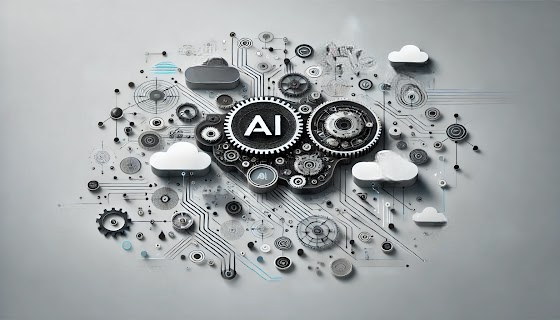
The enterprise’s pursuit of advanced Artificial Intelligence (AI) and Machine Learning (ML) is hitting an infrastructure wall. The core challenge isn’t just compute power; it’s finding the optimal balance of scale, control, and strategic financial oversight across diverse environments—a model often referred to as Transcloud or a Multi-Cloud Strategy.
This paper explains why Hybrid Cloud Solutions are the essential foundation for running modern AI/ML Workloads. It’s designed for CTOs, AI/ML leaders, and enterprise architects who must secure competitive advantage while ensuring Cloud Security and Compliance. We will detail the hybrid advantage in terms of agility, governance, and operational best practices.
The rapid ascent of AI/ML models, particularly those leveraging Deep Learning and neural networks, requires immense and often unpredictable computational power. The sheer volume of data and the complexity of training, especially for resource-intensive Generative AI and large language models (LLMs), now far exceed what traditional, monolithic systems can handle.
This revolution is characterized by workloads demanding specialized compute for:
Relying on a single infrastructure type—whether exclusively on-premises or entirely in one Public Cloud—creates significant bottlenecks for enterprises seeking true Scalability. On-premises systems lack the elasticity for sudden, large-scale AI Model Training in Cloud bursts required by deep learning.
Conversely, single-cloud reliance introduces strategic risks. Enterprises face significant limitations due to:
The Hybrid Cloud Solutions model offers the definitive strategic answer. It enables organizations to operate on a unified platform, seamlessly blending the elasticity and cutting-edge Cloud AI Services of the Public Cloud with the control and low latency of Private Cloud infrastructure (including high-performance Colocation facilities).
This approach treats the AI/ML Infrastructure as a dynamic pool of resources perfectly suited to the variable demands of modern ML Workloads. Organizations can strategically leverage specific provider capabilities, such as those offered by AWS AI/ML, Google Cloud AI/ML, and Azure Machine Learning, while maintaining full control over core assets, fulfilling the promise of a true Multi-Cloud Strategy for AI and ML Applications.
The hybrid model is defined by its ability to intelligently place specific AI/ML tasks—from feature engineering to deployment—on the best-suited infrastructure.
Hybrid Cloud Solutions provide true Scalable Cloud Architecture. Enterprises can use their private cloud or Colocation data center for stable, lower-cost inference and testing, while instantly tapping into the hyper-scale power of public clouds for GPU-intensive AI Model Training in Cloud. Leveraging new hybrid capabilities like EKS Hybrid Nodes or VMware Cloud Foundation (VCF) with Tanzu, this ability to burst workloads across environments drastically increases operational Agility and Scalability.
For organizations handling sensitive intellectual property or regulated patient data, Data Control and Locality are non-negotiable. Hybrid Cloud allows private data to remain within the secure perimeter of the Private Cloud or Colocation facility, meeting strict internal and external security requirements. Only anonymized data or compute-intensive processes are moved to the Public Cloud, facilitating stringent AI Governance and Risk Management.
Training a large Deep Learning model can be immensely expensive. Hybrid architecture enables organizations to place predictable, long-running ML Workloads and foundational Data Storage and Management on their cost-optimized private cloud. They then use the public cloud only for peak demand or specialized hardware, achieving significant Multi-Cloud Cost Optimization. This requires adopting FinOps principles to Inform, Optimize, & Operate at scale and establishing new corporate controls for cost governance. Furthermore, many organizations are now repatriating applications and workloads to Colocation for greater control and lower costs, a key aspect of the modern hybrid financial strategy.
By maintaining sensitive data in a controlled private environment, the hybrid approach inherently simplifies Cloud Security and Compliance. It allows organizations to enforce a single set of policies across their entire infrastructure, often leveraging a zero-trust approach to protect against breaches and applying AI-powered security monitoring to quickly identify and mitigate threats in complex hybrid environments.
The flexibility of a hybrid model facilitates a true Multi-Cloud Strategy for AI and ML Applications. Organizations benefit from Vendor Flexibility, free to use the specific Cloud ML Tools that excel at a given task—such as using GCP for advanced Natural Language Processing (NLP) and Azure for enterprise integration—without committing to a single vendor for all services, effectively mitigating vendor lock-in.
Building a hybrid environment for AI/ML requires more than just two connected clouds; it demands a unified architectural approach.
A foundational AI-ready infrastructure includes high-performance compute resources (GPUs/TPUs), unified Cloud Computing Platforms, and a cohesive networking layer. The goal is to create a seamless fabric where workloads can move freely based on cost and compute requirements, running on a common platform across the Hybrid Cloud.
Successful AI/ML operations, particularly those requiring real-time scoring or analysis, depend on minimal latency. This requires dedicated, high-bandwidth interconnects (like AWS Direct Connect or Azure ExpressRoute) linking the Private Cloud or Colocation data centers to the Public Cloud. Enterprises can leverage direct cloud connectivity services to refine hybrid strategies and ensure data movement for model synchronization is fast, secure, and reliable.
The keystone of hybrid architecture is the unified orchestration layer. Containerized Applications (Docker, Kubernetes) provide the necessary portability, allowing the exact same environment to run on-premise or in any public cloud. vSphere with Tanzu is a strong example of how modern infrastructure supports this. This layer is critical for establishing effective DevOps for AI/ML pipelines and facilitating Continuous Integration / Continuous Deployment (CI/CD).
Hybrid environments rely on intelligent Data Pipelines that minimize unnecessary transfers. Strategies include data virtualization or establishing a “landing zone” in the Public Cloud for large-scale model training, ensuring that Big Data Analytics is efficient and cost-effective across the infrastructure.
Data Gravity—the tendency of data to attract applications and services—can be a major bottleneck. The hybrid approach mitigates this by allowing organizations to run compute-intensive tasks where the data is voluminous (often the Private Cloud or Colocation), minimizing expensive and time-consuming data egress.
Critical business functions like fraud detection or personalized customer experiences require Real-Time AI/ML. By placing inference models (the deployed AI) on the Private Cloud or closer to the user, hybrid infrastructure ensures low-latency responses, a crucial factor in customer-facing applications.
Effective Model Lifecycle Management dictates that resources must match the task. AI/ML itself can be used to distribute workloads across the Hybrid Cloud based on latency, cost, and availability. This ensures efficient Resource Utilization by provisioning powerful, temporary Public Cloud compute for training and shifting the resulting model to resource-optimized private infrastructure for continuous, steady-state serving.
Managing two environments requires centralized oversight. A unified Monitoring and Observability strategy is essential to track performance, latency, and resource consumption across the entire hybrid AI landscape, often leveraging AIOps tools to automate detection and resolution of cross-platform bottlenecks.
The complexity of hybrid environments demands a unified security framework. By implementing consistent authentication, authorization, and AI-powered threat detection across both the Public Cloud and Private Cloud sides, organizations can more efficiently analyze security logs and network traffic in real time.
Protecting the proprietary models and sensitive training datasets is paramount. Hybrid solutions enable granular, role-based access control (RBAC) to ensure that only authorized data scientists and IT staff can access specific resources, preventing accidental or malicious Data Loss Prevention (DLP) incidents, reinforcing the zero-trust approach.
In regulated fields like healthcare and finance, meeting compliance standards is mandatory. Hybrid Cloud provides the flexibility to adhere to geographic data residency rules by keeping specific data sets on-prem while still using the Public Cloud’s advanced, certified compute services to meet stringent Cloud Security and Compliance requirements.
The successful adoption of Hybrid Cloud for AI/ML hinges on breaking down organizational silos. DevOps for AI/ML (MLOps) principles foster the necessary collaboration, creating integrated workflows where Data Scientists can quickly iterate on models, and IT Teams can reliably provision and manage the AI Infrastructure they run on.
The ability to dynamically shift workloads requires financial oversight. FinOps is crucial for optimizing the mix of fixed (Private Cloud) and variable (Public Cloud) costs. It involves continuous analysis of utilization rates, cloud provider pricing, and leveraging predictive analytics for automated resource allocation to ensure maximum ROI of AI Implementation.
Best practices involve centralized identity management, automated provisioning of compute resources across all environments, and maintaining consistent configuration via Infrastructure-as-Code (IaC) tools to simplify complexity and ensure governance across the distributed AI Infrastructure.
As AI moves into devices, factories, and remote locations, Edge Computing for AI becomes vital. Running simple inference models at the edge minimizes latency and reliance on continuous cloud connectivity. Technological innovations in Hybrid Cloud and AI aim to expand the potential of Edge Computing capabilities, making the edge the new, farthest boundary of the Hybrid Cloud.
The Hybrid Cloud provides the framework for this integration. Models trained in the Public Cloud are deployed to the Private Cloud, and then seamlessly pushed down to Edge Devices for localized, real-time decision-making, completing the end-to-end AI Workflow Automation.
The most demanding models of the future—Generative AI and large language models (LLMs)—require massive, flexible compute. Hybrid Cloud provides the perfect environment to scale these models, offering the ability to access specific high-end GPU clusters in the Public Cloud for training while maintaining proprietary guardrails locally, accelerating the delivery of AI-Driven Business Transformation.
The hybrid approach fosters an environment of rapid innovation. By removing infrastructure limitations, Data Scientists can quickly experiment with new concepts and algorithms, driving the next wave of advancements in AI-Driven Business Transformation.
The Hybrid Cloud Solutions architecture is not a temporary fix; it is the resilient, flexible, and cost-effective Strategic Foundation required for any enterprise committed to long-term AI/ML success.
The transition to Hybrid Cloud is no longer optional—it is the Strategic Imperative for enterprises serious about maximizing the potential of their Next-Generation AI/ML Infrastructure. It uniquely solves the fundamental tension between control, cost, and extreme Scalability. By embracing hybrid, organizations gain the agility to innovate quickly while ensuring the compliance and security demanded by real-world applications.
Is your organization’s infrastructure ready to support the next wave of Deep Learning and Enterprise AI Solutions? Start your AI/ML Cloud Migration planning today by assessing your data governance needs and identifying the optimal hybrid architecture that ensures performance and secures your data. Partner with experts who can help you define your Multi-Cloud Strategy and execute a seamless transition to the foundational architecture that enables AI Without Compromise.