Transcloud
March 23, 2026
March 23, 2026

The core bottleneck in modern AI adoption is not training a model—it’s getting that model from the developer’s notebook into a live, valuable business application. Weeks spent manually stitching together deployment scripts and dependency management translate directly into delayed ROI and missed competitive opportunities.
Today, the measure of a good model is not just its model accuracy, but its speed-to-production. Business leaders demand rapid iteration, and the delay between a new insight (Code) and an active solution (Production) must shrink from weeks to hours. This pressure drives the need for true MLOps maturity.
The “60 Minutes” goal is a mindset: it forces teams to prioritize automation, minimize manual intervention, and leverage the most efficient cloud-native tools. This discipline dramatically lowers the cost of iteration, enabling Continuous Delivery of new features and preventing models from becoming obsolete due to data drift.
The secret to this rapid delivery lies in combining two powerful forces:
Together, they create an automated, end-to-end pipeline that makes the “60-minute” deployment a reality for your core Machine Learning initiatives.
The “60 Minutes” goal is a mindset: it forces teams to prioritize automation, minimize manual intervention, and leverage the most efficient cloud-native tools. While achieving this speed consistently depends on factors like model complexity and data volume, successfully executing this focused, one-hour sprint proves the fundamental capability for Continuous Delivery of new features and prevents models from becoming obsolete due to data drift. This discipline dramatically lowers the cost of iteration.
The key to achieving this accelerated workflow is strict adherence to timeboxing and automation. Every minute counts. Note: These minute-by-minute targets represent the ideal time for an optimized, small-to-medium ML model on a mature, pre-configured cloud environment.
Overview of the Accelerated Workflow: From Code to Production in Five Phases
| Phase | Timebox | Focus | Key Technical Output |
| 1 | Minutes 1-10 | Initialization & Code Prep | Versioned Code & Data |
| 2 | Minutes 11-30 | Accelerated Training | Production-Ready Model Artifact |
| 3 | Minutes 31-45 | Packaging & Containerization | Deployment Container Image |
| 4 | Minutes 46-55 | Orchestration | Automated CI/CD Pipeline |
| 5 | Minutes 56-60 | Launch & Verification | Live API Endpoint |
This phase ensures the core assets are clean, versioned, and ready for processing.
For the 60-minute goal, we assume the data is mostly clean. The focus here is a single, concise script to handle basic feature selection and transformation. Over-engineering Data Preparation here will kill your timebox.
Your Python code should be minimal: load data, call the AutoML library, and save the result. Every function must be focused. Your list of Model dependencies must be declared immediately in a requirements.txt file.
Use Git for Code versioning. Critically, use tools like DVC (Data Version Control) to track the specific dataset snapshot used. This ensures reproducibility, which is essential for rapid MLOps testing.
AutoML removes the most time-consuming step—manual iteration—allowing the model to be generated and tuned within minutes.
AutoML platforms automatically handle feature scaling, algorithm selection, and Hyperparameters tuning, delivering the optimal solution much faster than manual trial-and-error.
This is where expertise in Cloud ML Platforms is invaluable.
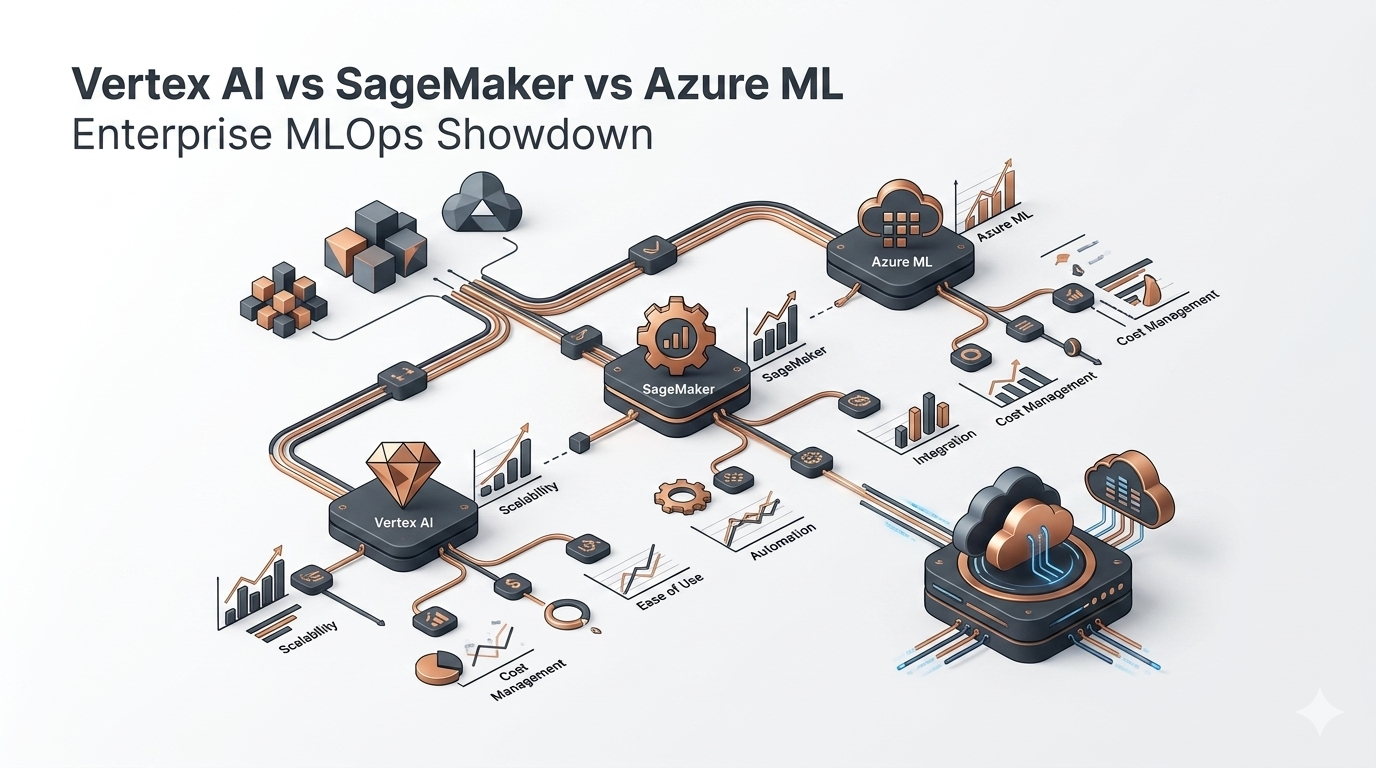
Transcloud Expertise: Our teams leverage native cloud solutions like Google Cloud Vertex AI Pipelines, AWS SageMaker Autopilot, or Azure Machine Learning AutoML to launch the training job instantly. This multi-cloud capability ensures we use the best tool for the specific cloud environment, shaving minutes off the training phase.
The AutoML process generates a leaderboard of models. Quickly select the one meeting your minimum required Performance metrics (e.g., minimum acceptable Model accuracy) and serialize it.
The resulting Model artifact (a pickle, ONNX, or similar file) is the key output, ready to be handed off to the deployment phase.
The model must be encapsulated into an immutable, deployable unit.
Docker and Containerization eliminate dependency hell. By packaging the model, serving API endpoint logic, and all dependencies into one Images, you guarantee that what works on a developer’s machine will work exactly the same in production.
Use micro-frameworks like FastAPI or a lean Flask instance to handle the Model Serving logic. This API wrapper loads the serialized model and processes the real-time prediction request.
The build process must be automated. Your CI/CD system should automatically build the Docker image and push it to a registry (like AWS Elastic Container Registry or Google Container Registry). This step should be optimized for layered caching to ensure a near-instant build if only the model artifact changes.
Automation is the engine of the 60-minute goal.
The CI/CD Pipeline for ML differs from standard software in that it must test Code, Data, and the resulting Model. This Automation sequence is the definition of mature MLOps.
The pipeline must be triggered by a single action (e.g., merging code). Its purpose is clear Workflow orchestration: Build Container $\rightarrow$ Test $\rightarrow$ Deploy.
Leverage cloud-native CI/CD tools for integration.
Transcloud Expertise: We specialize in integrating tools like GitHub Actions or Azure DevOps with the specific cloud deployment targets. This means the deployment pipeline speaks directly to the Kubernetes cluster or Serverless function, achieving genuine Continuous Delivery across multi-cloud environments.
The pipeline must include two essential automated checks:
The final minutes are dedicated to the push to production and validation.
Your choice determines the speed and scalability. For a 60-minute launch:
The CI/CD pipeline executes the final Deployment command, replacing the old model (if one exists) with the new container image.
Immediately confirm the new API endpoint is live and running. Use a quick test call to verify latency and check initial Performance metrics in your Monitoring systems. Time’s up!
The goal is to deliver value fast. Defer complex features, elaborate visualizations, and non-essential documentation.
Use standardized base Docker images, templated CI/CD YAML files, and pre-defined MLOps project structures. This is where a partner like Transcloud provides significant leverage, bringing battle-tested templates.
Every manual step is a potential point of failure and delay. Strive for zero-touch deployment once the code is committed.
Defer advanced features like Blue-green deployment or complex A/B testing until the model is stable and providing value (Phase 3 of your MLOps maturity).
The 60-minute sprint establishes the capability. Sustained success requires a permanent MLOps framework.
Your next deployment will leverage techniques like A/B testing or Canary deployment. The CI/CD pipeline will now trigger automated Model retraining when performance drops, using robust Model versioning practices.
As traffic grows, scale your deployments using the Kubernetes orchestrator, and use specialized tools like MLFlow or Kubeflow to manage the full Microservices architecture of your ML system.
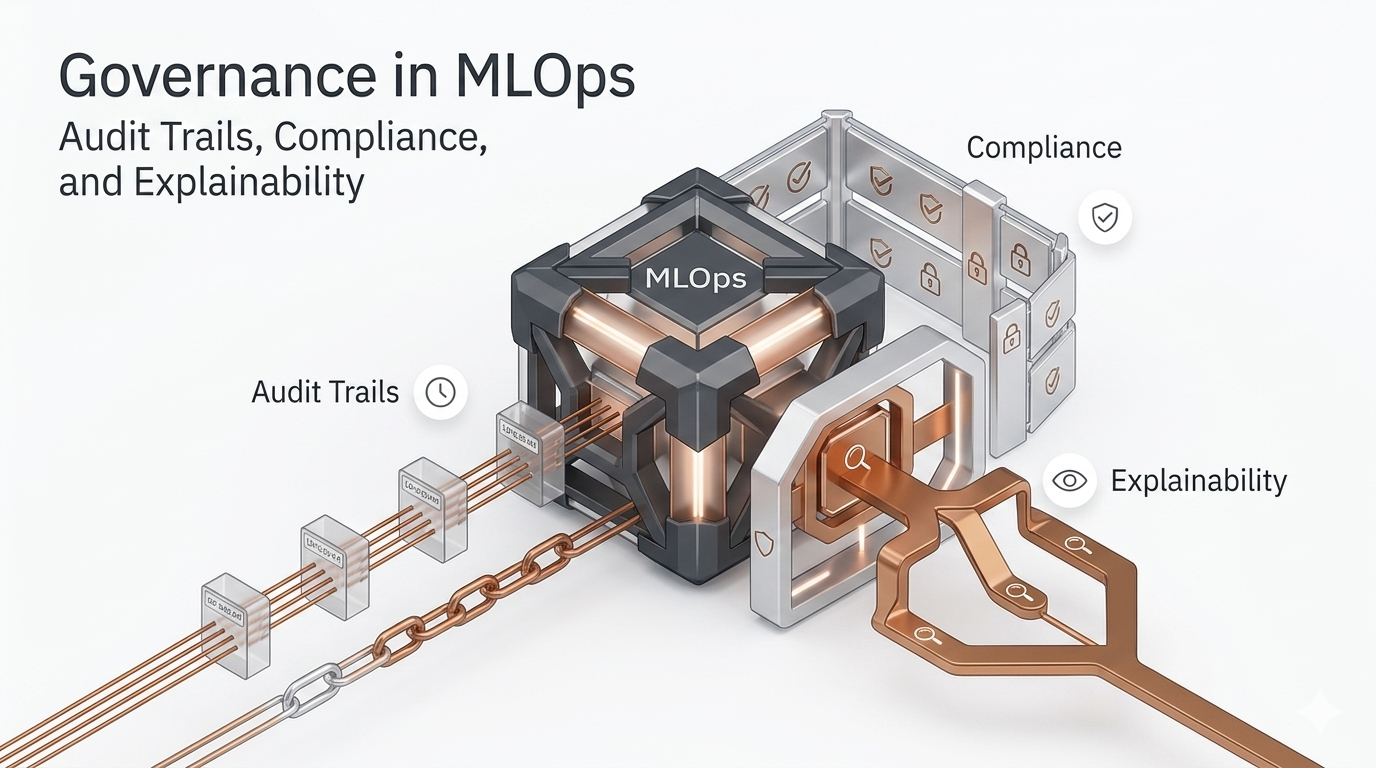
Future-proofing means establishing continuous Data validation checks and using Data Versioning Tools to maintain lineage between the raw data and the prediction, ensuring compliance and explainability.
Moving from code to production in 60 minutes transforms ML from a lab experiment into a core operational capability. This speed accelerates innovation, maximizes ROI, and fundamentally changes how quickly your business can respond to market shifts.
Achieving this level of Continuous Deployment maturity requires deep expertise in multi-cloud tooling, containerization, and MLOps.
Transcloud Labs’ specialization in Multi-Cloud MLOps and AI/ML Cloud Migration is purpose-built to help enterprises achieve this acceleration. We deliver the pre-configured environments and automated pipelines that make the 60-minute code-to-production journey a standard practice, not an exception.
Ready to stop waiting weeks and start deploying in minutes? Contact Transcloud Labs to blueprint your accelerated MLOps pipeline today.