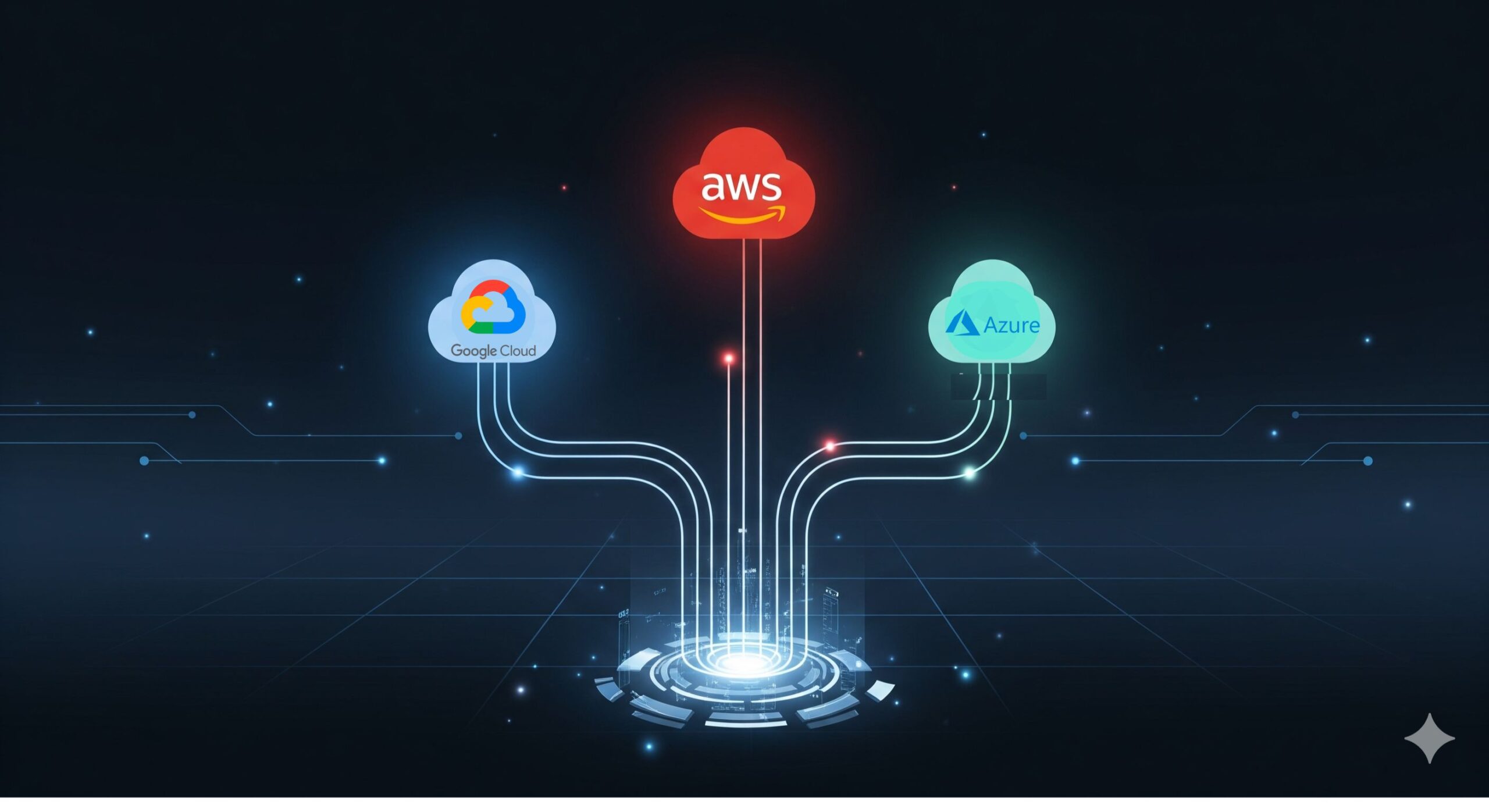
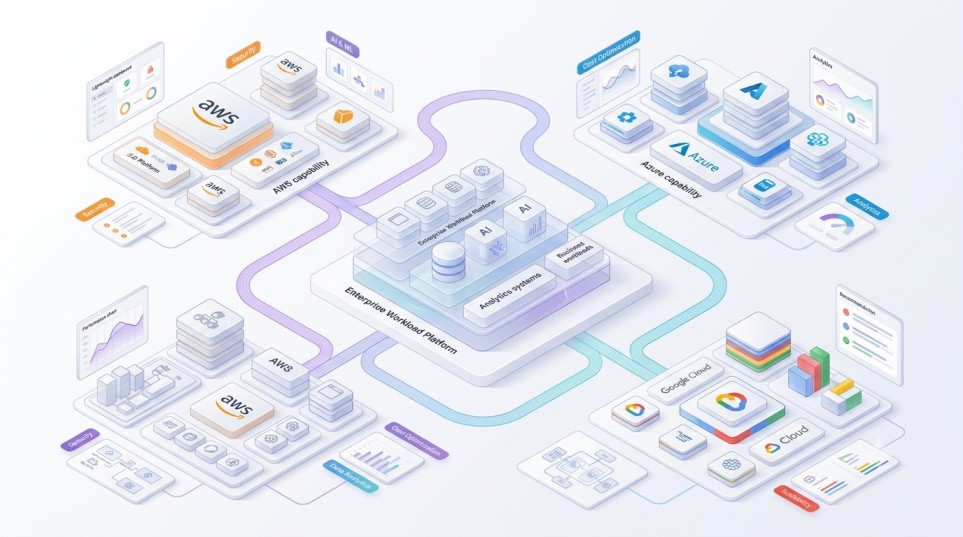
For Indian startups, cloud decisions are rarely about features alone. The real question is: which platform gives you the best cost efficiency at scale without locking you in?
AWS, Azure, and GCP all compete aggressively in India—with Mumbai, Hyderabad, and Chennai regions—but pricing differences on paper don’t reflect actual spend.
The Reality: Pricing Pages Don’t Reflect Your Final Bill
All three providers show similar base pricing. But your actual cost depends on:
- Region selection (Mumbai vs Hyderabad vs global regions)
- Data transfer patterns
- Billing currency (INR vs USD)
- Discounts and commitments
- Architecture decisions
This is why two startups using the same cloud can have 30–40% difference in cost.
Region-Based Cost Differences (India Context)
AWS (Mumbai – ap-south-1, Hyderabad – ap-south-2)
- Mature ecosystem
- Higher data transfer (egress) costs in many cases
- Strong enterprise tooling
Azure (Central India – Pune, South India – Chennai)
- Competitive pricing for Microsoft-heavy workloads
- Better integration with enterprise licensing (Windows, SQL Server)
GCP (Mumbai – asia-south1, Delhi NCR – asia-south2)
- Often cheaper for compute-heavy workloads
- Sustained use discounts automatically applied
- Strong in analytics and AI workloads
Key takeaway: Region matters more than provider branding. Running in Mumbai vs an overseas region alone can change your bill significantly.
Where Each Cloud Becomes Cost-Effective
When AWS Is More Cost-Effective
- Large ecosystem dependencies
- Mature production workloads
- Heavy use of reserved instances or savings plans
When Azure Is More Cost-Effective
- Startups using Microsoft stack (Windows, .NET, SQL Server)
- Existing enterprise agreements
- Hybrid environments (on-prem + cloud)
When GCP Is More Cost-Effective
- Data-heavy workloads (analytics, ML)
- Stateless or containerized applications
- Teams that benefit from automatic discounts
The Hidden Costs Indian Startups Miss
Across all three clouds, these are the real cost drivers:
- Data egress charges (especially for global users)
- Idle resources in dev/test environments
- Overprovisioned compute
- Multi-region deployments without optimization
- Lack of cost monitoring in INR terms
Also, billing in USD vs INR can create forex fluctuation impact, which many startups don’t account for.
Why Multi-Cloud Can Be More Cost-Effective (If Done Right)
Most startups assume multi-cloud increases cost. In reality, it can reduce it—if used strategically.
Example approach:
- Run compute-heavy workloads on GCP
- Use AWS for ecosystem-heavy services
- Use Azure for Microsoft licensing benefits
This avoids overpaying on a single platform.
But without governance, multi-cloud can also multiply inefficiencies.
Compare Your Cloud Costs Across AWS, Azure & GCP
Before committing to one provider, get clarity:
- Side-by-side cost comparison based on your workload
- INR-based estimation (not generic USD pricing)
- Region-specific recommendations (Mumbai, Hyderabad, etc.)
What a Cost-Optimized Setup Looks Like
Startups that control cloud costs typically:
- Use right-sized instances instead of overprovisioning
- Mix on-demand + reserved + spot pricing
- Track cost per feature or product unit
- Implement tagging and cost allocation from day one
- Continuously optimize—not just at setup
Common Mistake: Choosing Once and Sticking Forever
Many startups pick one cloud early and never revisit the decision.
Result:
- Paying premium for workloads that could be cheaper elsewhere
- No leverage in pricing negotiations
- Limited flexibility
Cloud strategy should evolve with scale.
Get a Tailored Cloud Cost Strategy for Your Startup
If you’re unsure which cloud (or combination) is right:
- Get a custom cost breakdown across AWS, Azure, and GCP
- Identify the most cost-efficient architecture for your workloads
- Avoid long-term vendor lock-in
Final Thought
There is no single “cheapest cloud.”
The most cost-effective approach for Indian startups is usually not AWS vs Azure vs GCP—it’s how you design, optimize, and sometimes combine them.
The difference between overspending and efficiency comes down to architecture decisions, not provider choice alone.