Transcloud
June 18, 2026
June 18, 2026
Cloud adoption has fundamentally changed how organizations think about resilience. Infrastructure can be provisioned in minutes, applications can span multiple regions, and automated backups have become a standard part of operations.
As a result, many organizations feel confident about their disaster recovery posture. Backups are running, snapshots are scheduled, and data is being replicated. On paper, everything looks protected.
But resilience is rarely tested on paper.
When an outage occurs, the challenge is rarely whether data exists. The challenge is whether the business can recover quickly enough to meet operational and customer expectations.
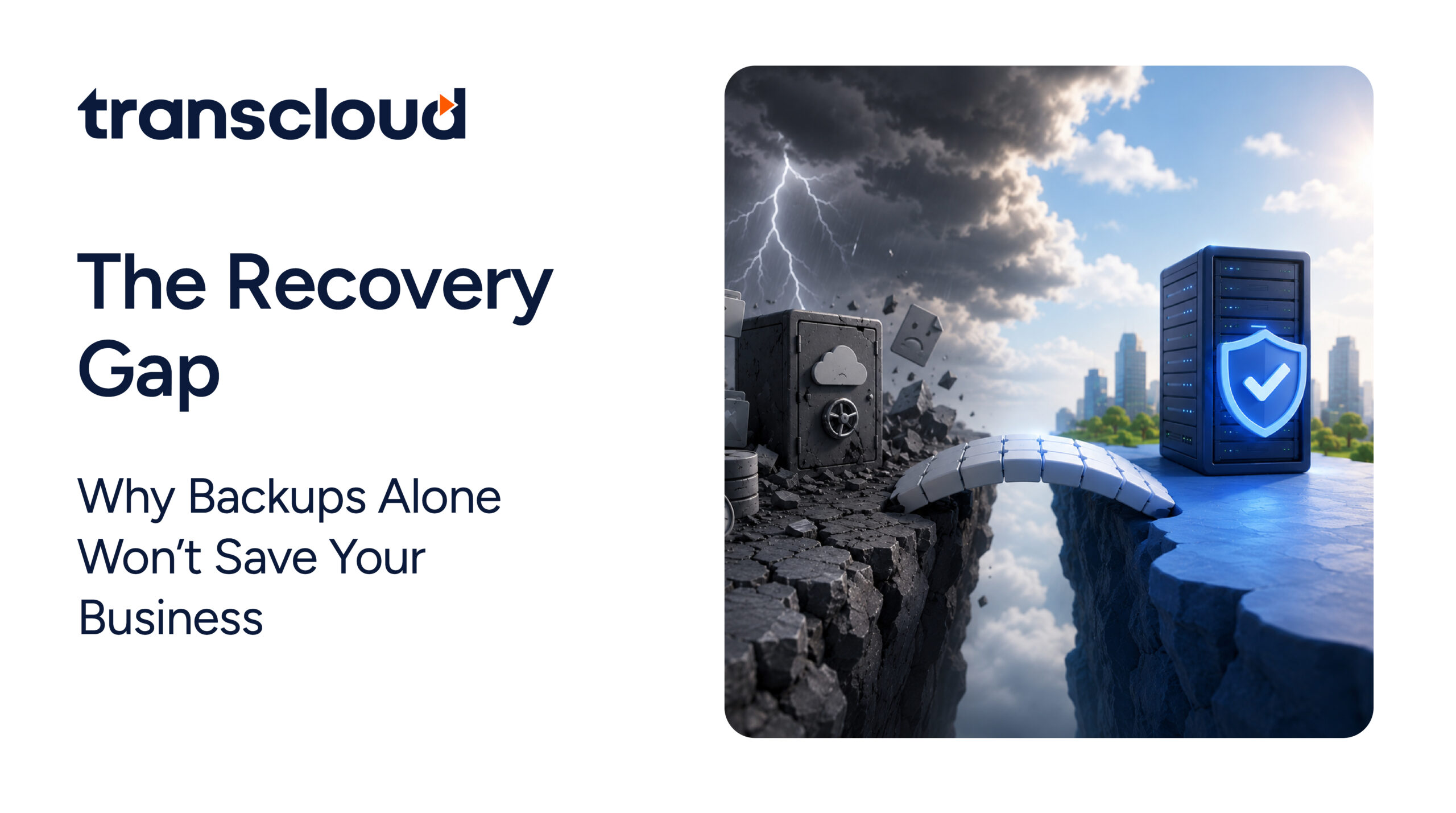
This is what creates the recovery gap—the difference between having backups and having a proven ability to restore business-critical services.
Why Backups Are Only Part of the Story
Most recovery plans focus heavily on protecting data. While data protection is essential, modern applications depend on far more than databases.
A typical production environment may include:
Restoring a database is often only one step in a much larger recovery process.
Organizations frequently discover this reality during their first major incident. Data may be available, but rebuilding the environment required to use that data becomes a far more complex challenge.
The Cost of Untested Recovery Plans
Many disaster recovery strategies are documented once and rarely revisited.
Teams change. Infrastructure evolves. New services are introduced. Cloud environments expand.
Meanwhile, recovery documentation remains untouched.
Over time, recovery plans become increasingly disconnected from the environments they are supposed to protect.
This creates several risks:
Extended Downtime
Every additional minute spent identifying dependencies, locating documentation, or clarifying responsibilities increases recovery time.
Operational Confusion
Without clearly defined ownership and recovery procedures, teams often duplicate efforts or wait for decisions during critical incidents.
False Confidence
Successful backups create the perception that recovery is guaranteed, even when no recovery process has ever been tested.
How Mature Organizations Approach Recovery
Organizations with strong resilience practices view disaster recovery as an operational capability rather than a compliance requirement.
Instead of asking, “Are backups running?” they ask:
Most importantly, they rehearse recovery before they need it.
Recovery drills expose assumptions, identify gaps, and provide realistic recovery timelines long before an actual outage occurs.
Closing the Recovery Gap
The goal of disaster recovery is not simply to preserve data.
The goal is to restore business operations.
Backups remain an essential component of that strategy, but they are only one piece of the equation. True resilience comes from understanding how systems recover, who owns the process, and whether the organization can execute under pressure.
When an incident occurs, customers rarely care whether a backup completed successfully.
They care about how quickly service is restored.
And that difference is where recovery readiness becomes a competitive advantage.