Intern Training
September 14, 2026
September 14, 2026
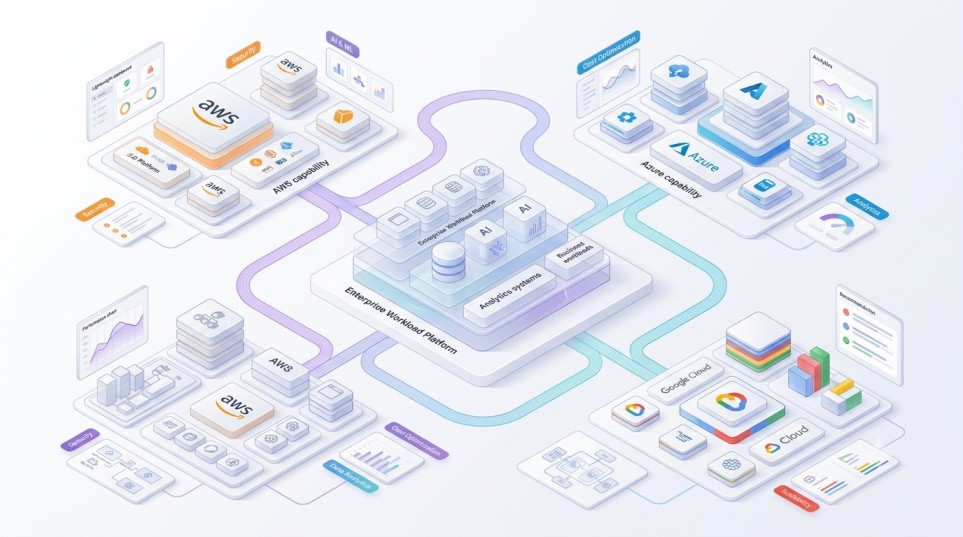
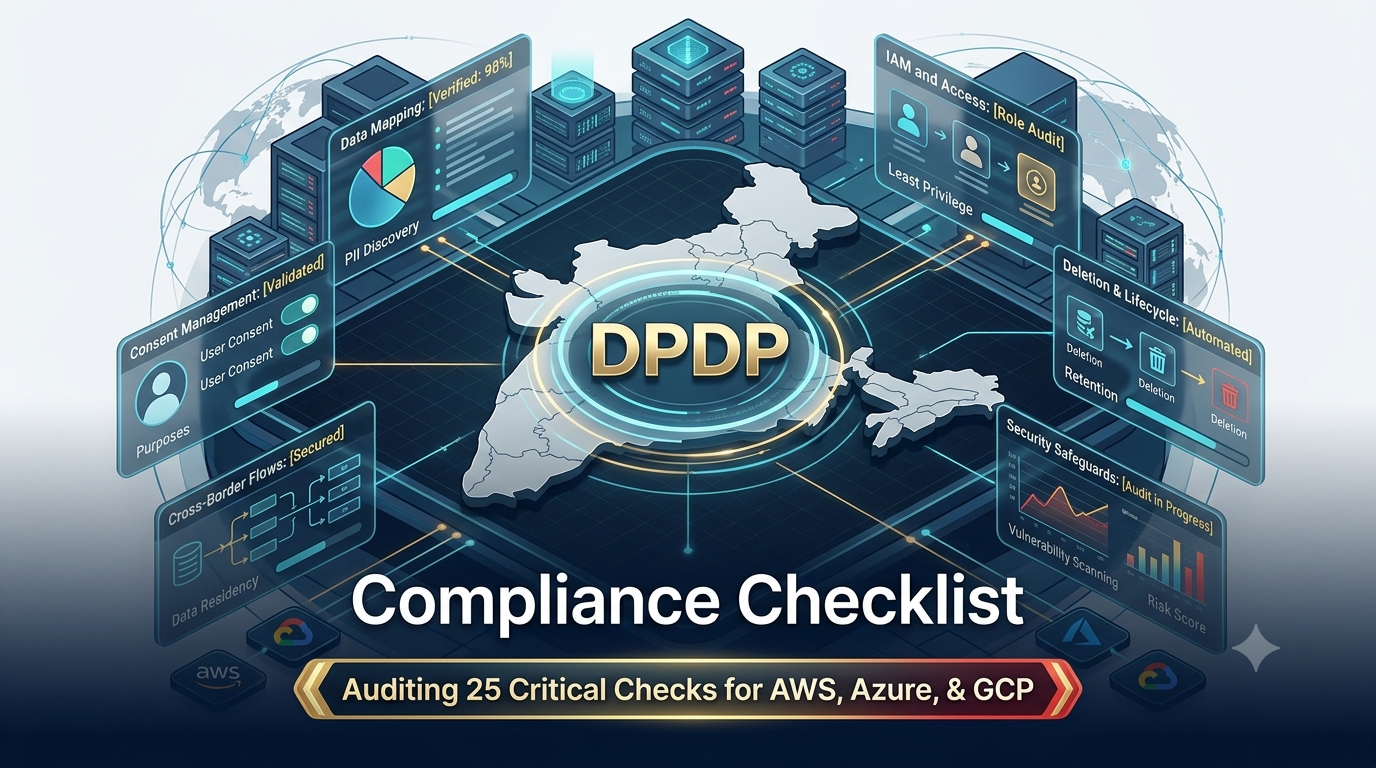
Your cloud infrastructure is not DPDP compliant simply because it runs on AWS, Azure, or Google Cloud. Compliance depends on how your organization collects, processes, stores, secures, accesses, retains, and deletes digital personal data across its cloud environment.
This distinction is important for Indian B2B companies.
The Digital Personal Data Protection Act, 2023 (DPDP Act) establishes obligations around the processing of digital personal data. The Digital Personal Data Protection Rules, 2025 were notified later to support implementation. Together, they make data governance and cloud security an operational responsibility—not just a legal or policy requirement.
So, the question for a business should not be:
“Are we using a compliant cloud provider?”
It should be:
“Can we demonstrate that personal data in our cloud environment is properly controlled and protected?”
That requires visibility across your infrastructure.
For cloud infrastructure, DPDP compliance means having the technical and organizational controls needed to support lawful processing and protect digital personal data under your control.
This includes understanding:
The DPDP Act places responsibility on the Data Fiduciary for processing undertaken by it or on its behalf by a Data Processor, while also requiring appropriate technical and organizational measures and reasonable security safeguards.
In simple terms, moving personal data to the cloud does not transfer accountability for protecting that data.
Your cloud environment should be able to answer these questions:
If several of these questions cannot be answered clearly, your organization may have a compliance gap.
The first challenge is data visibility.
Personal data may exist across:
For many organizations, the problem is not a lack of security tools.
It is a lack of complete visibility.
A database may be protected while an exported copy of the same data sits in an improperly secured storage location.
Identify every cloud service that stores or processes personal data.
Then classify:
You cannot effectively protect personal data that you cannot locate.
Identity and access management is one of the most important cloud security controls.
Excessive permissions can allow users, applications, or service accounts to access more data than required.
The risk increases when organizations have:
The DPDP framework requires appropriate security safeguards and technical and organizational measures. Access control is therefore a critical part of a cloud compliance program.
Audit:
The objective should be simple:
Only the people and systems that need access to personal data should have it.
A cloud environment can have strong policies and still contain technical misconfigurations.
Common examples include:
These issues can create an unnecessary attack surface.
A compliance assessment should therefore review actual infrastructure configurations—not just written security policies.
Continuously monitor cloud environments for:
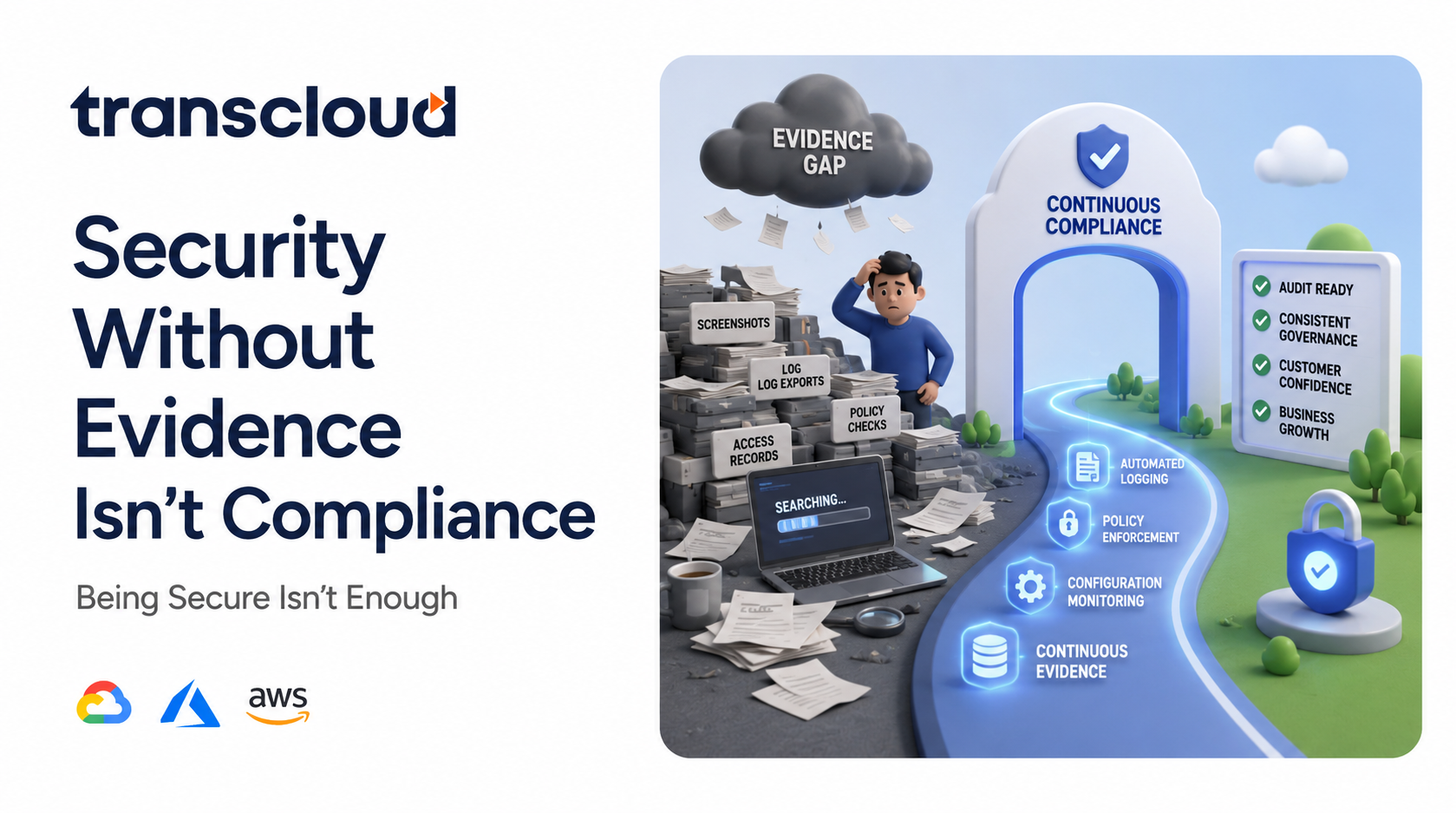
DPDP readiness requires evidence that security controls are operating in the actual cloud environment.
Detection is as important as prevention.
If an organization cannot identify who accessed a system, when they accessed it, or what happened afterward, investigating a potential breach becomes significantly more difficult.
The notified DPDP Rules include requirements around visibility into access through appropriate logs, monitoring, and review for detecting and investigating unauthorized access.
Your cloud environment should provide sufficient visibility into:
Logging without monitoring is not enough.
Logs must be available, reviewed, and usable during an investigation.
Data protection is not only about preventing unauthorized access.
Organizations must also consider what happens when data becomes unavailable.
The DPDP Rules specifically include measures supporting continued processing when confidentiality, integrity, or availability is compromised, including measures such as backups.
This makes backup and recovery relevant to compliance readiness.
Assess:
A backup that has never been tested may not provide the protection your organization expects during an incident.
A breach response plan should not begin after an incident occurs.
Organizations need to know:
The DPDP Act requires intimation of personal data breaches to the Board and affected Data Principals in the prescribed form and manner. The 2025 Rules further define notification requirements and timelines.
Run incident response exercises that test whether your teams can:
The real test is not whether you have an incident response document. It is whether your cloud teams can execute it.
Most B2B companies rely on external cloud providers, SaaS platforms, managed service providers, and other third parties.
The DPDP Act allows Data Fiduciaries to engage Data Processors under a valid contract, while responsibility for compliance remains with the Data Fiduciary for processing undertaken on its behalf.
This means vendor management should not stop after procurement.
Understand:
Cloud compliance requires visibility beyond infrastructure you directly manage.
Cloud storage makes it easy to retain data indefinitely.
Backups remain. Old databases remain. Test environments retain production copies. Logs continue growing.
But retention creates risk.
The DPDP Act contains obligations relating to the erasure of personal data when consent is withdrawn or the specified purpose is no longer being served, subject to legal requirements.
Identify:
Data lifecycle management should be connected to your cloud infrastructure.
One of the biggest misconceptions is that using AWS, Azure, or Google Cloud automatically makes an organization compliant.
Cloud providers offer infrastructure and security capabilities.
But your organization still decides:
The cloud provider provides the platform. Your organization remains responsible for how personal data is handled within the services it uses.
This is why DPDP compliance requires collaboration between legal, security, compliance, application, and cloud infrastructure teams.
Identify where digital personal data exists across your cloud environment.
Create a data inventory that connects data stores with applications and business owners.
Check for:
Prioritize findings based on the sensitivity and exposure of the data.
Review who has access to systems processing personal data.
Remove unnecessary permissions and regularly review privileged access.
Confirm that your teams can detect, investigate, and respond to unauthorized access and potential breaches.
Test the process.
Cloud environments change constantly.
New resources, identities, applications, and configurations can introduce new risks.
A one-time compliance assessment is therefore not enough.
Continuous monitoring helps organizations identify configuration drift and new exposure before they become larger compliance problems.
For many B2B companies, the biggest challenge is not understanding that data must be protected.
It is understanding where the risks currently exist.
An organization may have security policies, compliance documents, and cloud security tools but still lack answers to basic questions:
These are infrastructure questions.
And without clear answers, compliance becomes difficult to demonstrate.
The Act applies to the processing of digital personal data within its scope. Cloud infrastructure becomes relevant when it stores, processes, transmits, or supports systems handling that personal data.
No. Cloud providers provide security capabilities and infrastructure, but compliance depends on how the organization processes, secures, accesses, retains, and manages personal data within its environment.
Important controls include access management, encryption, network security, logging, monitoring, backup and recovery, incident response, and continuous configuration monitoring. The exact requirements should be assessed against the organization’s processing activities and legal obligations.
Yes. A publicly exposed database, excessive permissions, disabled logging, or other security weaknesses can increase the risk of unauthorized access to personal data.
No. Cloud environments change continuously. Organizations should continuously review security controls, access, configurations, and data exposure.
Your cloud infrastructure is DPDP-ready only when you have clear control and visibility over the personal data it processes.
That means knowing where the data exists, controlling access, securing infrastructure, monitoring for unauthorized activity, maintaining recovery capabilities, managing third-party processors, and being prepared to respond to a breach.
For Indian B2B companies, the practical starting point is not a compliance certificate.
It is a cloud infrastructure assessment.
Start by asking one question: Can we identify where personal data exists and demonstrate how it is protected?
If the answer is unclear, that is where your DPDP readiness assessment should begin.