Transcloud
March 19, 2026
March 19, 2026
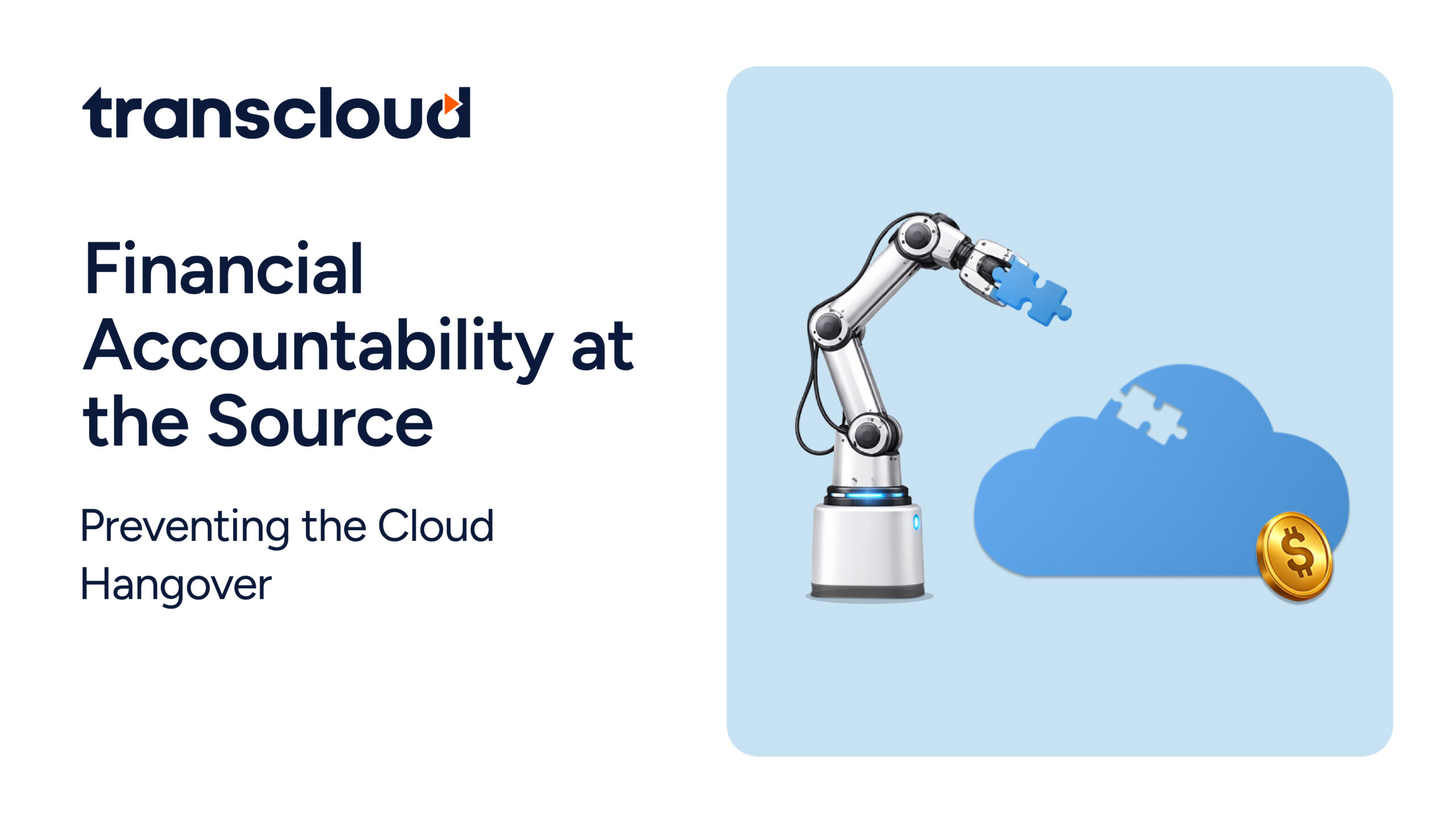
In many of the environments I’ve worked with, the shift toward Infrastructure as Code (IaC) and cloud automation is usually a major operational success. Deployment becomes faster, environments become reproducible, and engineering teams gain the ability to provision infrastructure through CI/CD pipelines rather than manual configuration.
However, there is a pattern I’ve seen emerge once organizations begin scaling their cloud infrastructure aggressively.
Provisioning becomes easier, but financial visibility often does not scale at the same pace.
It rarely begins with a major architectural decision. More often it starts with small operational changes. A team provisions an additional environment for testing. A workload is temporarily scaled to handle an expected traffic spike. A new service is introduced to support an experiment.
When infrastructure is managed through Infrastructure as Code (IaC) tools such as Terraform, these changes can be deployed in minutes.
Each action is reasonable. Each one supports delivery speed.
But months later, organizations often discover what I refer to as the cloud hangover. Applications are stable, deployments are running smoothly, yet the monthly cloud bill has grown far beyond expectations.
In modern platforms like Amazon Web Services, Microsoft Azure, and Google Cloud Platform, infrastructure can scale globally in minutes. That same capability allows cloud spending to scale just as quickly.
This is why FinOps and cloud financial management must be treated as core architectural concerns rather than post-deployment reporting tasks.
In many organizations, cloud cost management begins as a financial reporting activity. Finance teams review billing dashboards, analyze cloud spend, and request explanations for unexpected cost spikes.
The problem with this approach is timing.
By the time those reports appear, the infrastructure has already been deployed and the spending has already occurred.
FinOps introduces a different model. Instead of treating cost as an after-the-fact analysis, financial accountability becomes embedded directly into engineering workflows.
This means cloud cost governance, budget guardrails, and cost allocation policies are incorporated into the same systems that provision infrastructure.
In automated environments, financial governance must live alongside Infrastructure as Code, not outside of it.
This challenge becomes even more pronounced in multi-cloud architectures.
Many organizations today operate workloads across multiple platforms for resilience, regulatory requirements, or cloud vendor diversification. Running cross-cloud workloads across AWS, Azure, and GCP allows teams to optimize for availability, specialized services, and geographic distribution.
However, multi-cloud cost management introduces new challenges.
Each provider has different pricing models, billing structures, and service categories. Compute pricing varies, storage tiers behave differently, and cross-region deployments or network egress traffic can introduce unexpected costs when data moves between providers.
Without strong cloud cost governance, these differences can create financial blind spots across environments.
From my experience, organizations that manage multi-cloud infrastructure successfully are the ones that treat financial accountability as part of their cloud architecture design, not just an operational metric.
One of the most effective mechanisms for improving cloud cost visibility is standardized cloud resource tagging.
Every cloud resource—compute instances, storage volumes, databases, networking components, and Kubernetes infrastructure—should include consistent metadata that identifies its purpose and ownership.
Typical cost allocation tags include:
When cloud resource tagging is embedded directly into Infrastructure as Code modules, every resource deployed automatically inherits the correct metadata.
This creates immediate cost visibility across the cloud environment.
Without standardized tagging, cloud cost monitoring becomes extremely difficult. Billing reports contain thousands of resources without clear ownership, making cost attribution slow and inaccurate.
With automated tagging, cost allocation becomes systematic rather than investigative.
While visibility is essential, effective cloud cost governance also requires preventive controls.
In mature environments, policy frameworks can enforce financial guardrails during cloud resource provisioning. These controls may include:
These controls often leverage Policy as Code, allowing governance rules to be evaluated before infrastructure is deployed.
This ensures cost optimization happens proactively rather than reactively.
Instead of analyzing costs after infrastructure exists, organizations guide spending during the deployment process itself.
The real value of combining FinOps practices with Infrastructure as Code is predictability.
Automation enables rapid cloud infrastructure scaling, which is essential for modern engineering teams. Development teams must be able to create environments quickly, test new workloads, and deploy services across regions.
However, automation without financial accountability can lead to uncontrolled growth.
By embedding cloud cost allocation, tagging standards, and budget policies directly into infrastructure modules, organizations maintain the speed of automation while ensuring financial discipline.
This approach allows cloud resource management to remain transparent even as environments scale across multiple regions and providers.
One lesson that consistently proves effective is simple but powerful:
Treat cost allocation as a first-class design requirement.
Build standardized cost allocation tags, environment labels, and cost-center metadata directly into your base Infrastructure as Code modules. Every resource should automatically inherit these tags at deployment.
When tagging is automated, both engineering and finance teams gain immediate insight into cloud spend distribution.
There is no need to manually trace resource ownership or retroactively analyze billing reports.
The infrastructure itself becomes financially transparent.
Cloud platforms exist to enable speed, experimentation, and global scalability. They remove many of the traditional limitations associated with physical infrastructure.
But the same mechanisms that enable cloud automation also enable spending to grow quickly.
Organizations that successfully scale their cloud environments understand that financial accountability must evolve alongside technical capability.
When FinOps, cloud cost governance, and Infrastructure as Code operate together, organizations gain more than lower costs.
They gain control, visibility, and predictable cloud growth.
And in large multi-cloud architectures, that level of clarity becomes essential for sustaining long-term scale.