Transcloud
April 13, 2026
April 13, 2026
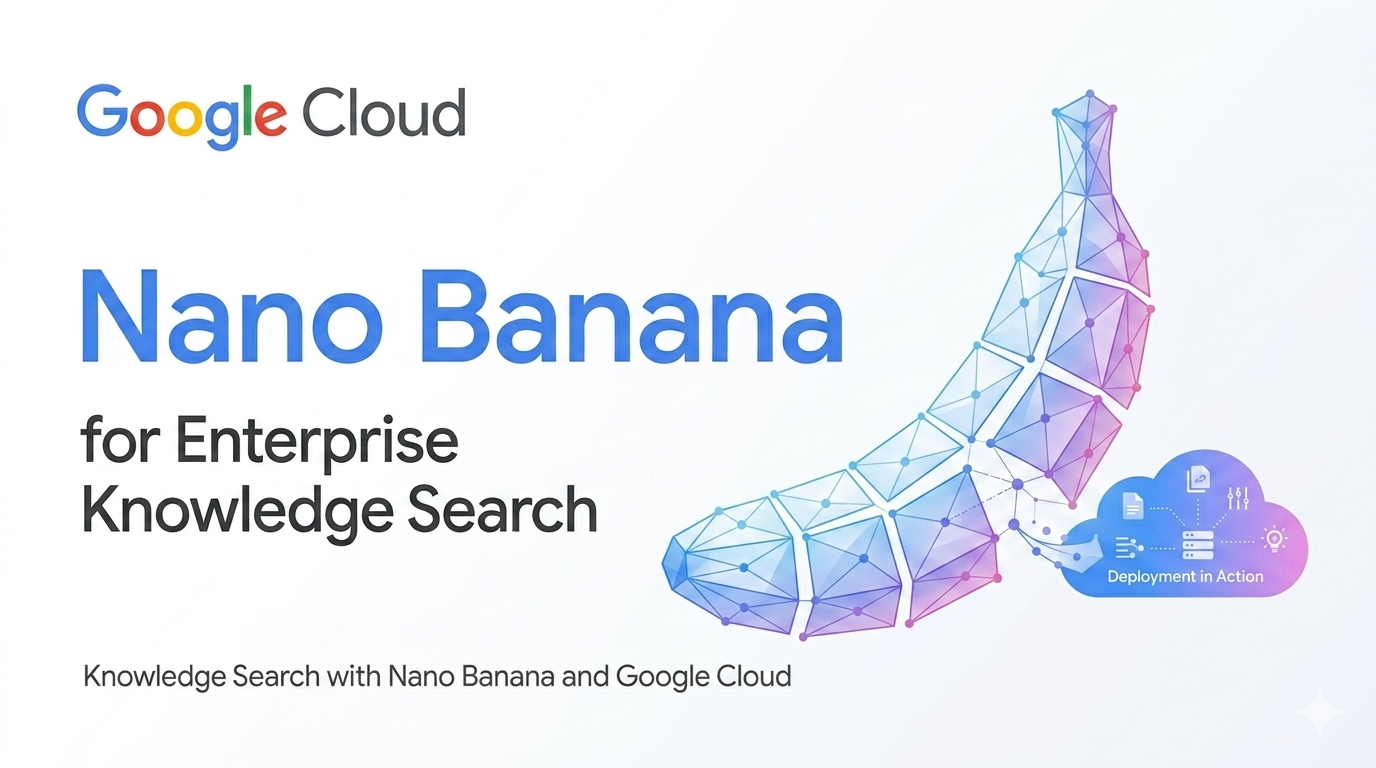
Enterprises generate large volumes of internal knowledge—documents, emails, wikis, tickets, and reports. The challenge is not creating information, but finding and using it efficiently. This is where AI-powered knowledge search tools like Nano Banana are positioned.
Nano Banana is typically used as an AI-driven enterprise search and knowledge retrieval system. It helps teams locate relevant internal information quickly instead of relying on manual search across disconnected systems.
This guide explains how enterprises approach deployment, what to prepare in advance, and how to make knowledge search actually useful for employees.
In practical terms, Nano Banana functions as an intelligent knowledge search layer across company data.
Instead of keyword-only search, it aims to:
For businesses, the value is time saved and better decision-making.
Before deployment, clarity on purpose is critical. Many knowledge search projects fail because they start with technology instead of goals.
Typical objectives include:
A narrow, measurable starting goal works better than a broad “search everything” approach.
Knowledge search quality depends heavily on data quality.
Enterprises usually connect sources like:
Before connecting everything, it helps to:
Poor data hygiene reduces AI search accuracy.
Enterprise knowledge is rarely universal. Some content must remain restricted.
Deployment planning should define:
A knowledge search tool should respect existing permission structures rather than override them.
A phased rollout reduces risk.
Common pilot groups include:
These teams often handle repeated knowledge queries, making ROI easier to measure.
Metrics to track:
Even strong AI search tools require user education.
Employees benefit from guidance on:
Without training, adoption may stall even if the system works well.
Early feedback improves performance.
Enterprises often:
Knowledge search improves over time when actively managed.
Knowledge search tools rarely operate alone.
In many enterprises:
For example, companies using solutions in the ecosystem of Google sometimes combine productivity AI with structured knowledge retrieval to reduce hallucinations and improve answer quality.
The search layer ensures AI responses are based on real company information.
Unstructured data
Many organizations store knowledge inconsistently.
Over-indexing low-value content
Not all information deserves equal weight.
Lack of ownership
Knowledge systems need clear owners.
Unrealistic expectations
AI search improves discovery but does not fix poor documentation practices.
Enterprise knowledge search is especially useful when:
In these contexts, even small efficiency gains scale quickly.
A practical rollout often looks like:
Month 1
Planning, data audit, and objective setting
Month 2
Pilot deployment with one team
Month 3
Feedback, optimization, and expansion
This staged approach allows controlled improvement.
Enterprise knowledge search is not about indexing everything. It is about making the right information accessible at the right time.
Nano Banana–style tools can reduce search friction, improve knowledge use, and support better internal decisions. The outcome depends less on the tool itself and more on planning, data quality, and governance. Organizations that treat knowledge search as an ongoing capability—not a one-time project—tend to see the strongest results.