Transcloud
July 29, 2026
July 29, 2026
A while ago, we were asked to perform a routine security review for a customer preparing for an internal compliance assessment. It wasn’t a response to an incident or a failed audit. The objective was simply to validate that their cloud environment still aligned with the security standards they had established when the platform was first built.
The review began exactly as expected. Monitoring dashboards looked healthy, workloads were running normally, and there were no indicators of suspicious activity. On the surface, the environment appeared well managed. Security controls had been thoughtfully implemented, and nothing suggested there was an immediate problem.
Then we found a storage bucket that was publicly accessible.
It hadn’t been exposed by accident. Months earlier, an external partner needed temporary access to exchange files during a migration project. Opening the bucket was the quickest solution, and once the project was complete, everyone assumed it had been reverted. It hadn’t.
As the review continued, similar patterns started to emerge. A service account still retained administrative privileges long after the application it supported had been decommissioned. A test environment remained accessible from the internet despite sitting unused for weeks. Security group rules created for troubleshooting had never been removed. Each finding looked relatively harmless when viewed on its own.
Together, they told a very different story.
The organization hadn’t experienced a security breach.
They had experienced configuration drift.
This is something we’ve observed across many cloud environments. Rarely does an organization’s security posture change because of one major mistake. Instead, it evolves gradually as infrastructure changes, teams grow, and operational priorities shift. Temporary decisions made under delivery pressure quietly become permanent parts of the environment.
In the early stages of cloud adoption, this isn’t usually a significant challenge. A small engineering team understands why certain permissions were granted or why a network rule exists. The context behind every decision is still fresh, and if something needs to be corrected, someone knows exactly where to look.
Growth changes that.
Applications become more distributed. Infrastructure is provisioned more frequently. Multiple teams begin deploying resources independently, and cloud environments evolve every day. Permissions are updated, new services are introduced, workloads are retired, and infrastructure is continuously modified to support changing business requirements. Each individual change is reasonable. The difficulty comes from understanding their cumulative impact months later.
This gradual change is what makes configuration drift so difficult to identify.
Unlike a failed deployment or a service outage, configuration drift doesn’t announce itself. Systems continue operating normally, applications remain available, and customers rarely notice anything unusual. The only difference is that the environment slowly moves away from the secure baseline it originally had. By the time someone notices, dozens—or even hundreds—of small changes may have accumulated.
We’ve found that many organizations assume periodic security reviews are enough to catch these issues. They certainly help, but they provide only a snapshot of an environment that changes every day. Between one review and the next, new resources are created, permissions are modified, and exceptions are introduced. Without continuous visibility, those changes become increasingly difficult to track.
This is why mature cloud security is shifting away from periodic validation toward continuous validation.
Rather than relying on engineers to manually review every configuration, successful teams automate the process. Infrastructure changes are continuously evaluated against security baselines. Policies are enforced automatically. Configuration drift is identified as soon as it occurs instead of months later during an audit or security assessment. Temporary access, public endpoints, and elevated permissions are regularly reviewed before they become permanent risks.
Perhaps the most important shift is cultural rather than technical. High-performing engineering teams recognize that cloud environments are living systems. Security isn’t something that is implemented once during deployment and assumed to remain unchanged. It has to evolve alongside the infrastructure itself.
One lesson we’ve seen hold true across organizations is that cloud security is rarely weakened by a single catastrophic decision. More often, it’s shaped by hundreds of small operational choices made over time. Most of those choices are reasonable in the moment. The challenge is ensuring they don’t quietly redefine the security posture of the entire environment.
The organizations that maintain strong cloud security aren’t the ones that avoid change.
They’re the ones that continuously validate it.
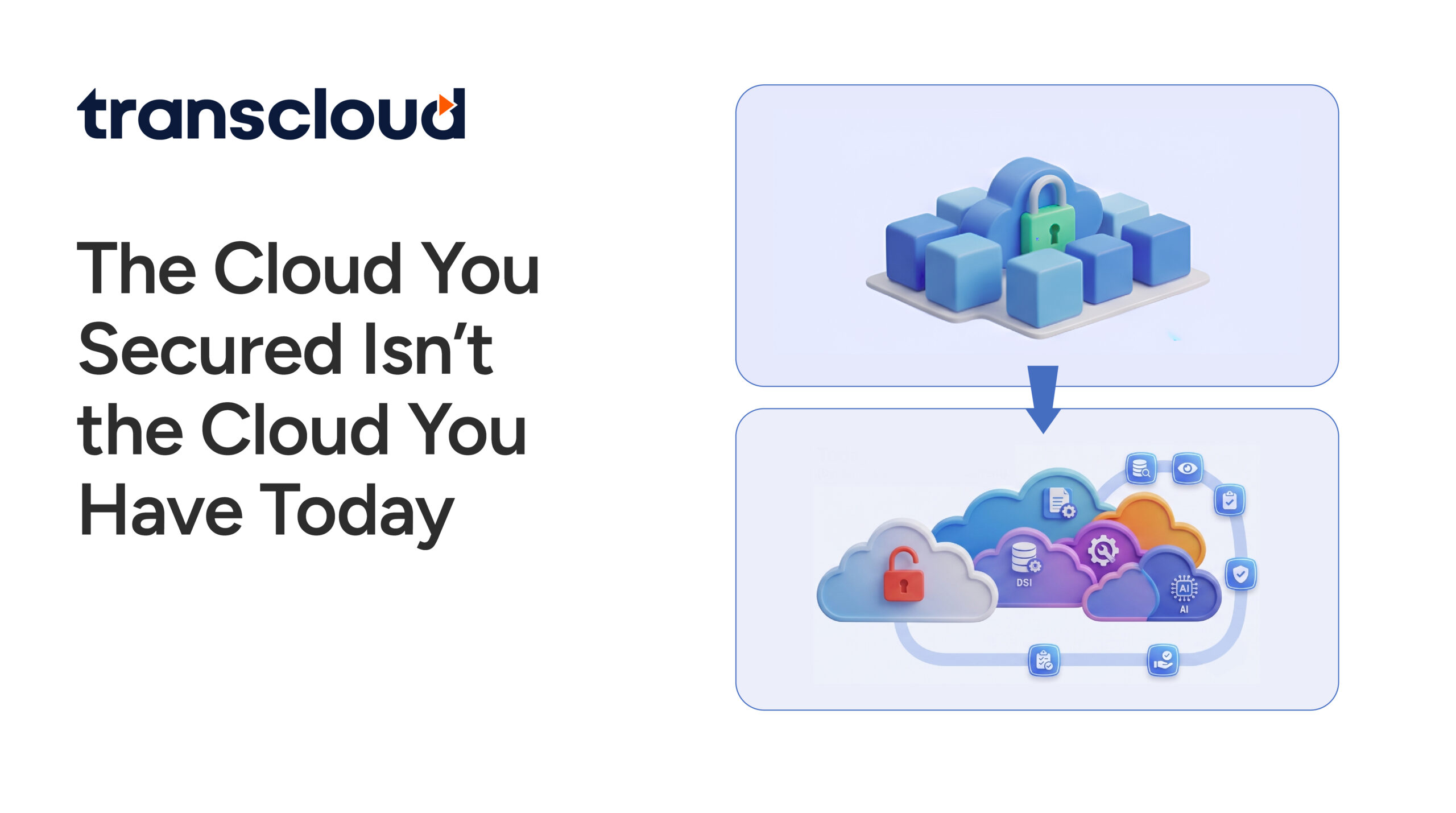
Because the cloud you secured six months ago probably isn’t the cloud you’re running today.